Therapist Training with Mental Wellness Collaborative
In the last days of April and the first few of May, the Mental Wellness Collaborative, Mental Health and Recovery Services, and Jackson Hole Therapy hosted a continuing education conference for behavioral health providers in Jackson. The theme of the conference was mental health through the lifespan, and topics included eating disorder support, engaging men in healthy communication, gender identity, and suicide prevention.
Our Partnership with Behavioral Health Providers
Community Safety Network deeply values our relationship with the three hosting organizations, and we were thrilled to be a part of the conference. People often assume that CSN client services advocates are therapists or that we offer clinical mental health support. While some of our practices might be “therapeutic” in nature, we are not therapists and none of our staff are clinicians.
We work very closely with many mental health providers in our community and often connect our clients with mental health providers. Our roles may overlap very slightly, but ideally, a survivor works with a therapist for long-term healing and growth, developing their agency and self-love, while CSN supports in the crisis moments. We are available any time of day or night with crisis services and emergency housing, to help navigate the criminal justice system, or connect to community resources.
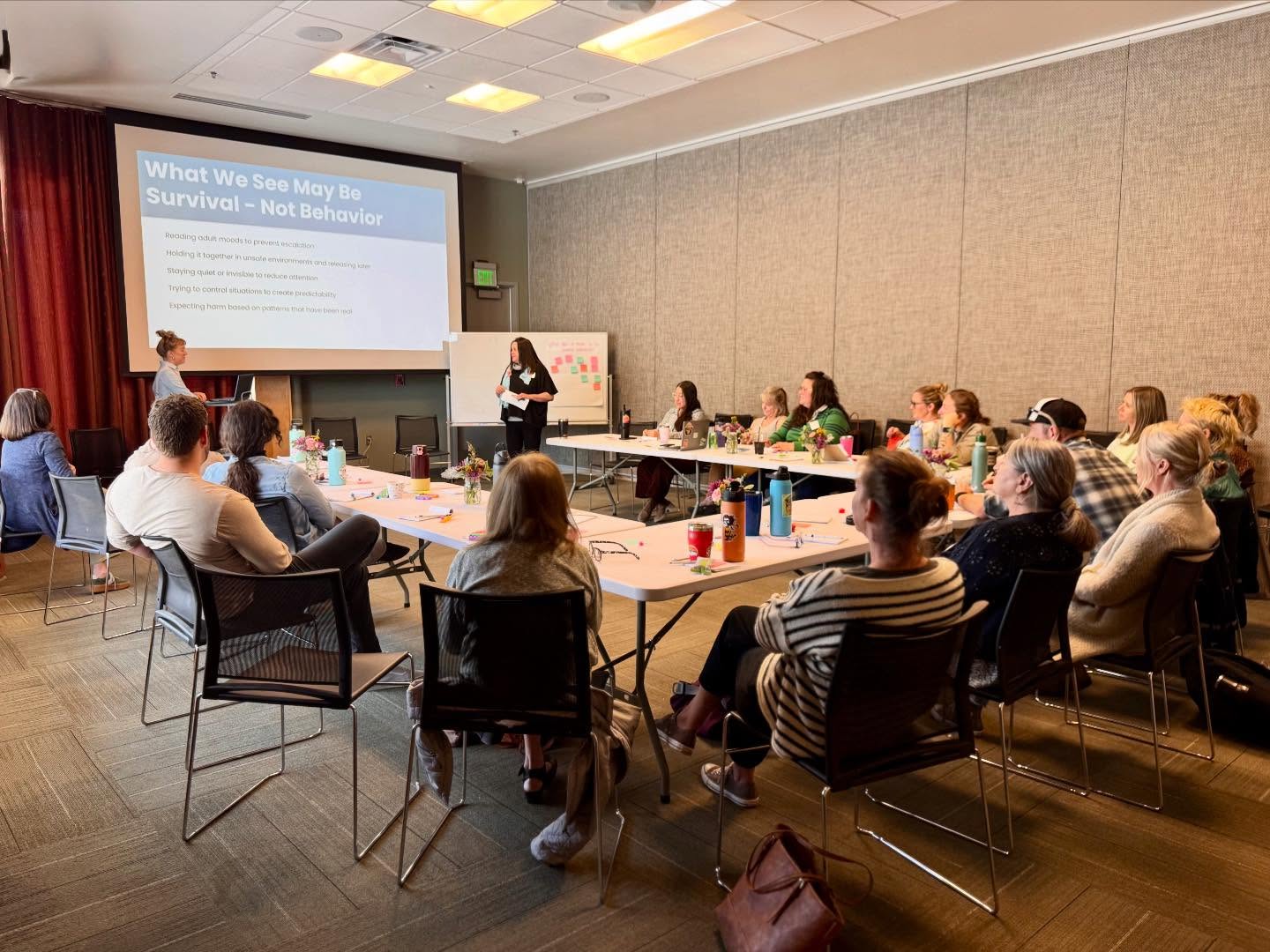
The Presentation
Shannon and Adrian presented an hour and a half long training titled, “Relationship Violence Across the Lifespan: What Helping Professionals Need to Know.” We separated the presentation into four sections according to age – children, adolescents, adults, and older adults/seniors. For each age category, we discussed risk factors, prevention, abusive relationship behaviors survivors/victims are most likely to experience specific to their age, what it might sound like for them to discuss those behaviors, and what survivor-centered support looks and sounds like.
Here are a few important points for helpers
- Most people who have experienced violence in their relationships downplay it, so it’s essential for helpers to understand what relationship violence might sound like when alluded to or minimized by the survivor. Though statements like “they just have a bad temper” don’t automatically equate to domestic abuse, they are red flags to approach with curiosity and care.
- It is essential that survivors of relationship violence do not feel judged by their helper. They are already judging themselves, dealing with the shame of society, and the belittling of their abuser. If they are able to maintain any relationships, any judgement or shame will probably create a chasm too wide to cross. As a helper, it might feel best to create an ultimatum, as you’re telling yourself you must take a stand against their abuse. That type of communication is only likely to sever the relationship, and mark you as someone who is not safe to rely on. Instead, persistent availability and support shows the survivor you are reliable and safe. It also allows them to be the decision maker, rather than you forcing their hand. If helpers can consistently invite choice and survivor decision-making, we can support the building of their agency that has been degraded by their abuser.
Some points related to age, specifically teens and elders
- Most people who experience domestic or sexual violence experience it for the first time as a child, teen, or young adult. Once they experience relationship violence once, they are more likely to experience it again. If helpers – parents, youth professionals, mental health clinicians, etc. – can create open, honest, non-judgmental lines of communication open about things that often cause shame (like relationship violence), than we are more likely to be able to address the violence the first time it happens, avoiding repeated re-victimizations. If a young person feels shame about an unhealthy relationship, that it’s the best they deserve or that being manipulated is normal, or has no one they feel they can approach about their relationship, it is likely to continue and the unhealthy behavior will escalate into abuse. If, instead, they have an adult in their life who doesn’t make them feel judged, it is more likely they will open up to that adult, who can course-correct and tell them they’re worth more than what they’re experiencing.
- Everyone deserves privacy. In a world where most parents are using tech to monitor their children, many teens struggle to understand the difference between what their parents can/should do and what their partners can/should do. Your dating partner is not your parent. They cannot tell you what to do, wear, eat, etc., while it is, in fact, a parent’s job to do so (in age-appropriate ways). There is a lot of nuance in our tech and surveillance-filled world. Help young people understand that while they can share their location with their friends if they want to, it would be unreasonable for every friend and every partner to demand their location at all times. This bleeds into trust – teens can benefit from understanding that they deserve a private space to discuss their romantic relationship with friends. Trust does not equal letting your partner read every text thread.
- Vulnerable adult abuse is very common from helpers, especially the elderly adult’s own children. Financial abuse is particularly common, and neglect. Report any signs of neglect of an elder or vulnerable adult to the Department of Family Services or, if after business hours, law enforcement.
Questions about relationship violence throughout the life span? Email adrian@csnjh.org. Thank you to our amazing hosts and to the curious, hard-working mental health professionals who showed up on a Saturday morning to talk about domestic and sexual violence. We are so grateful to you all and all your work!